Hyundai Research Project

Product Design / 2025 / 1 semester
Project Overview
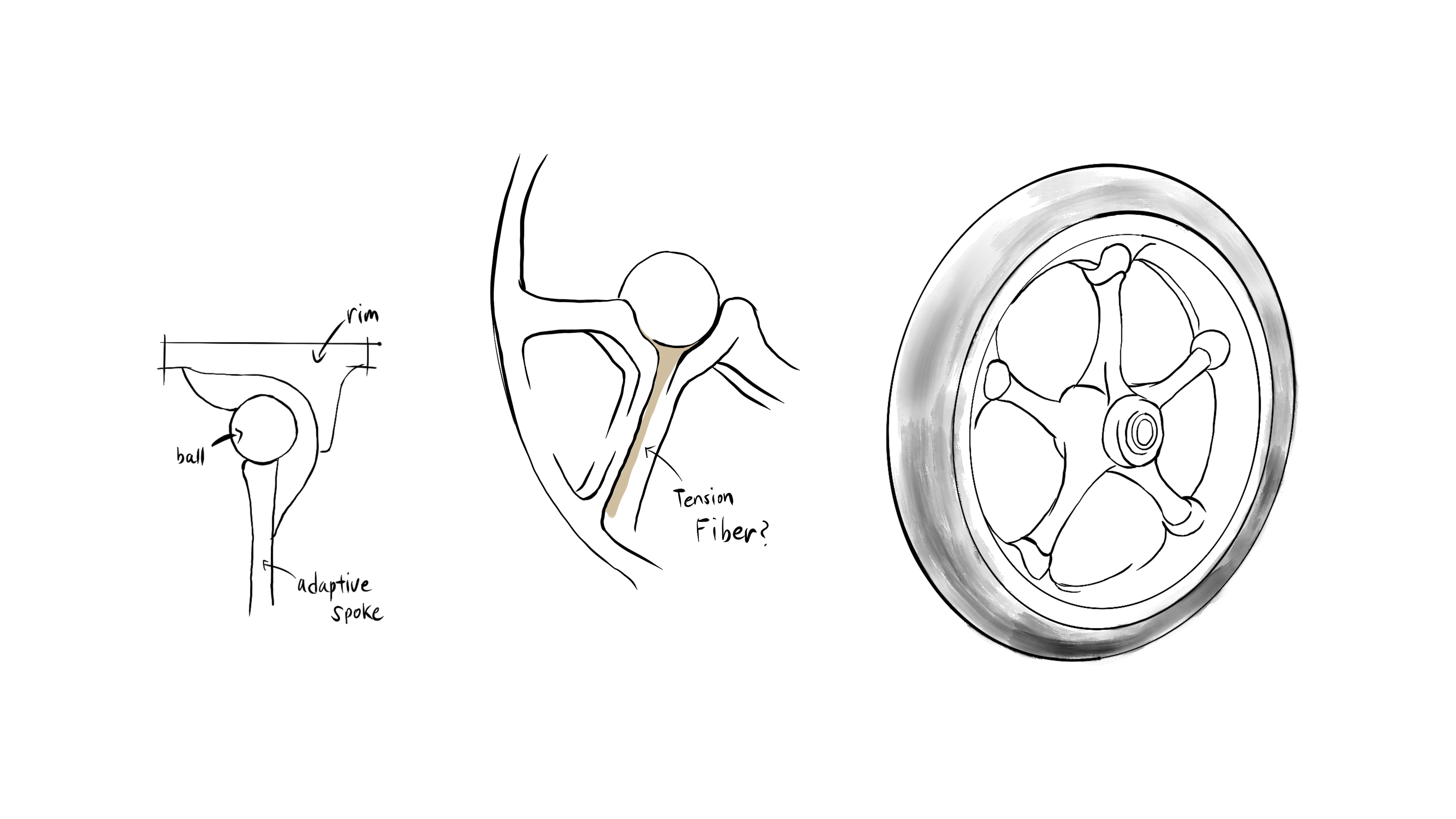
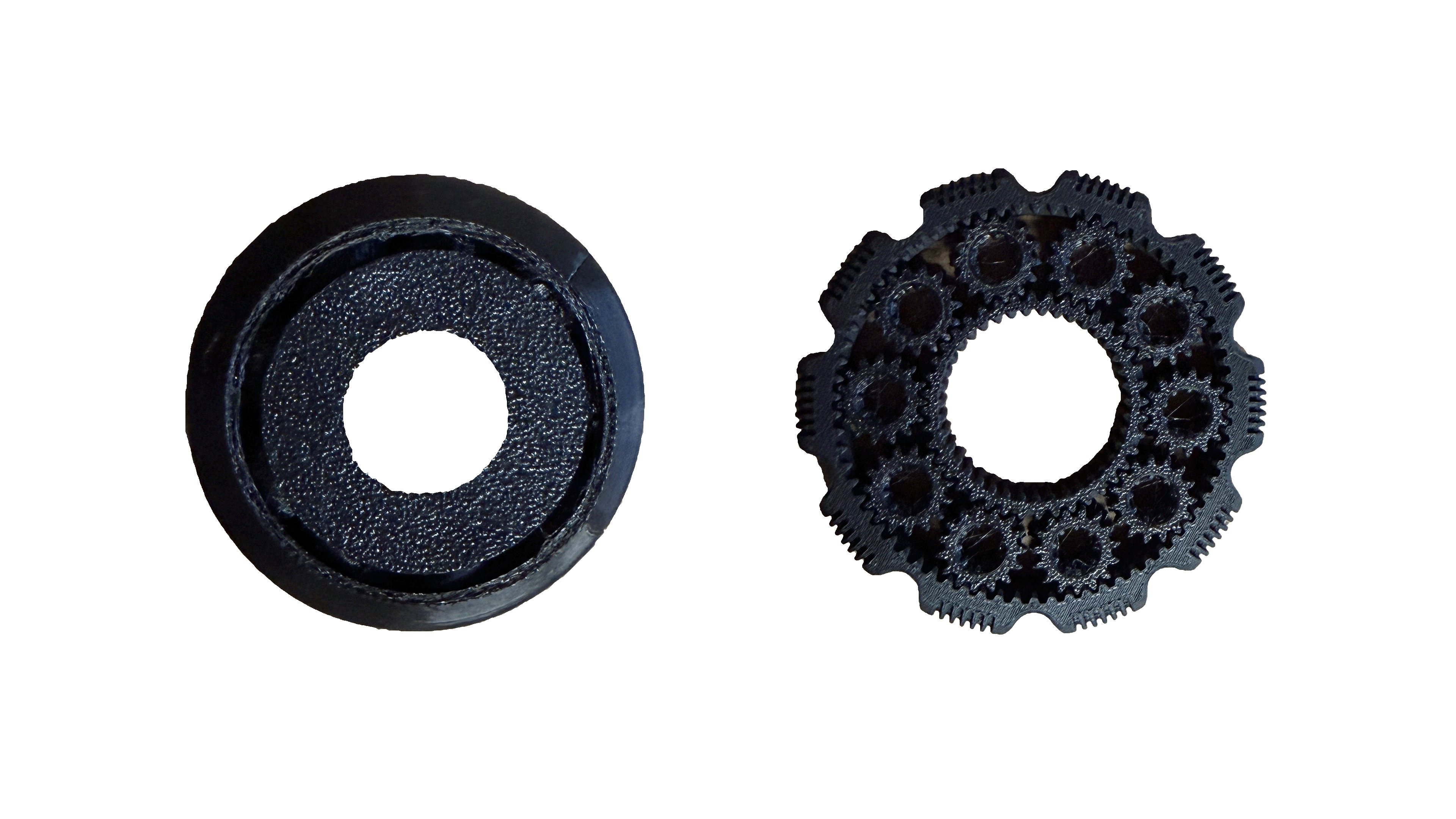
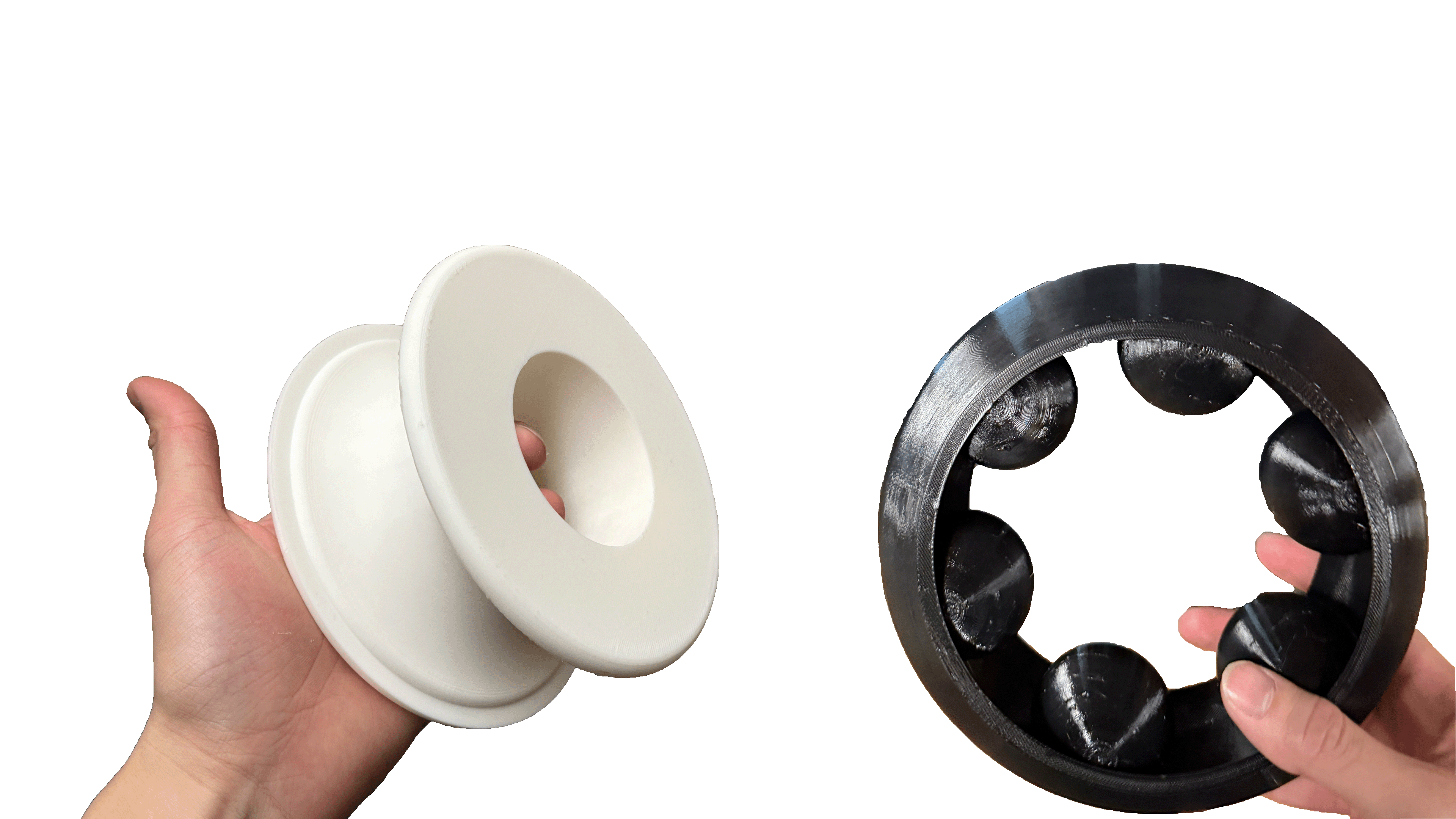
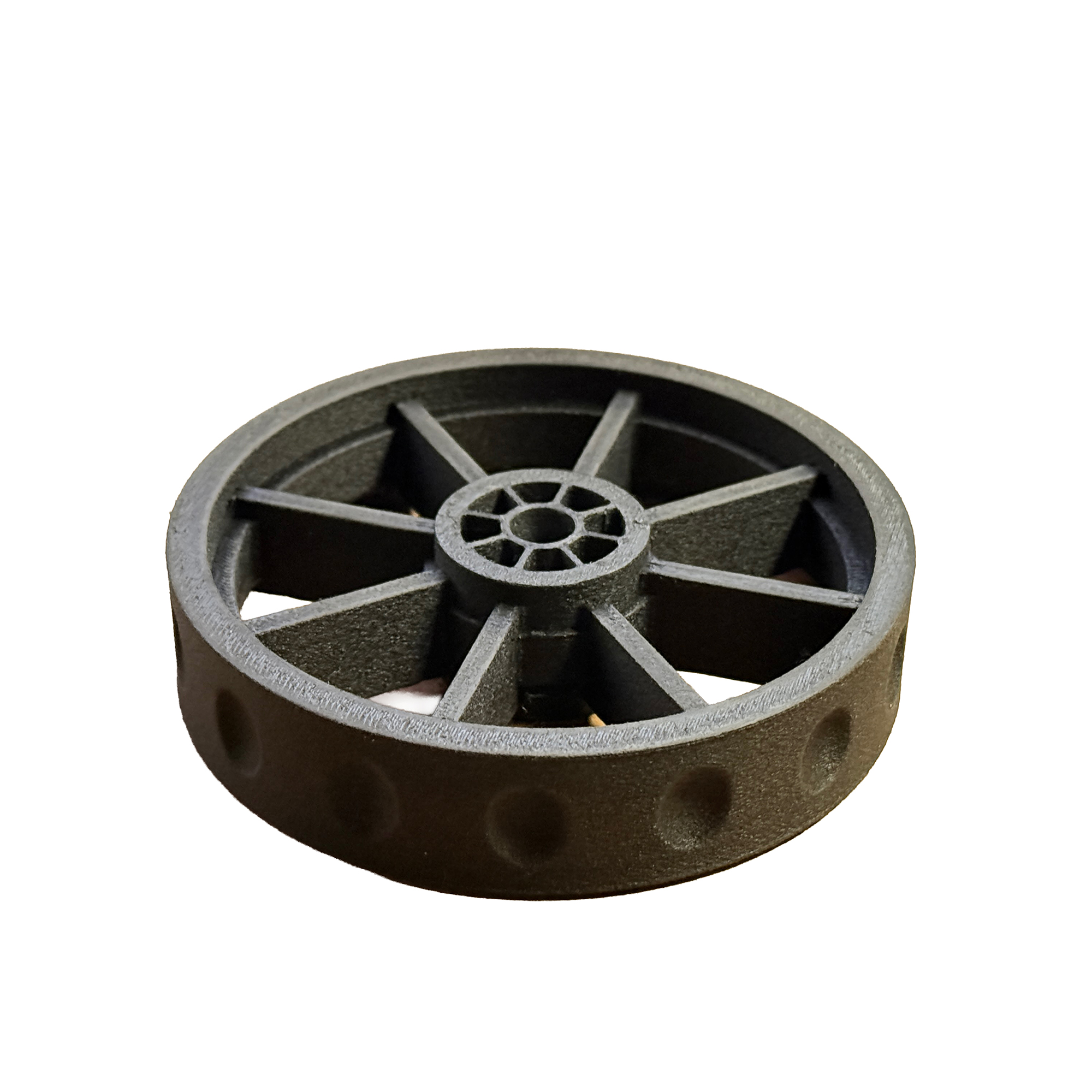
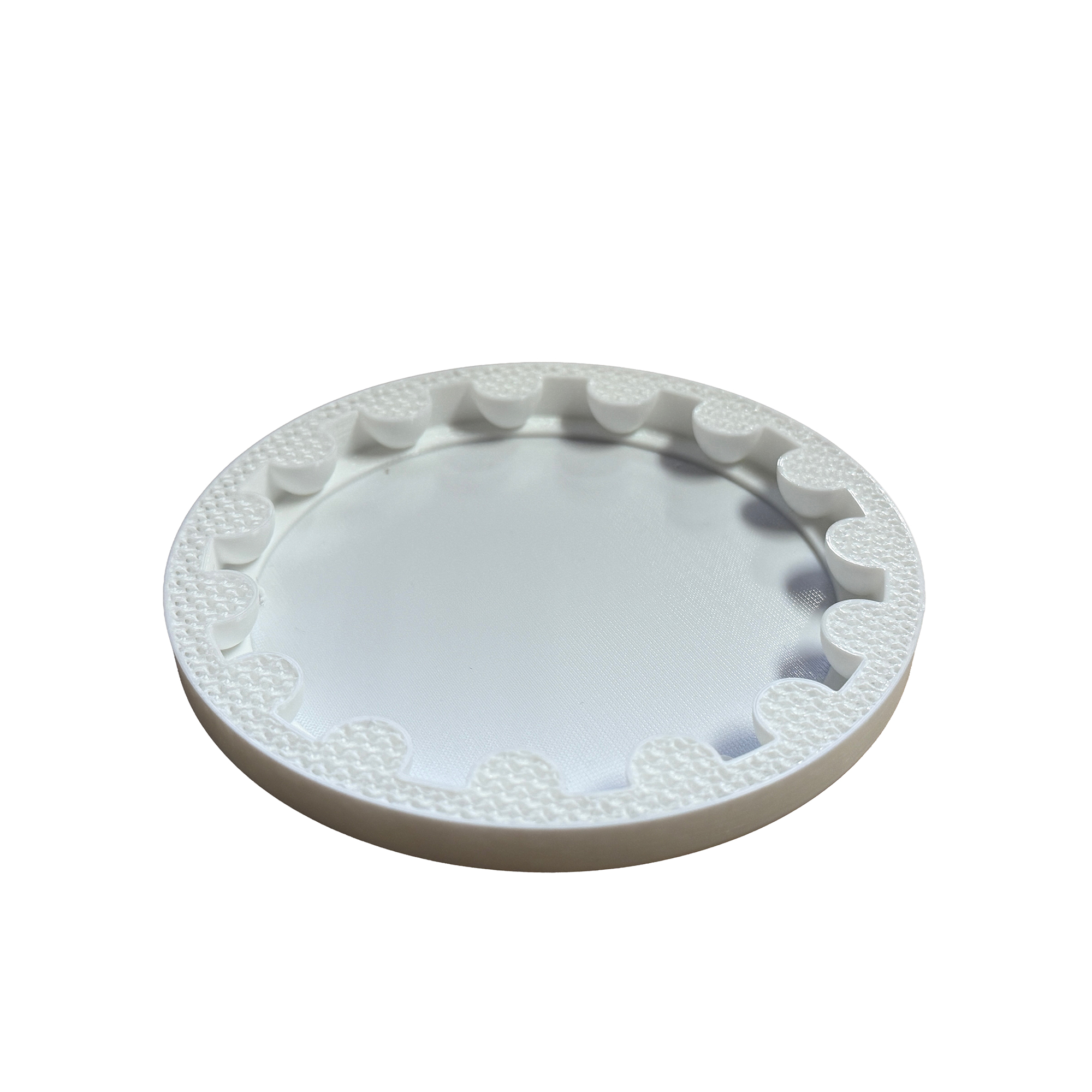
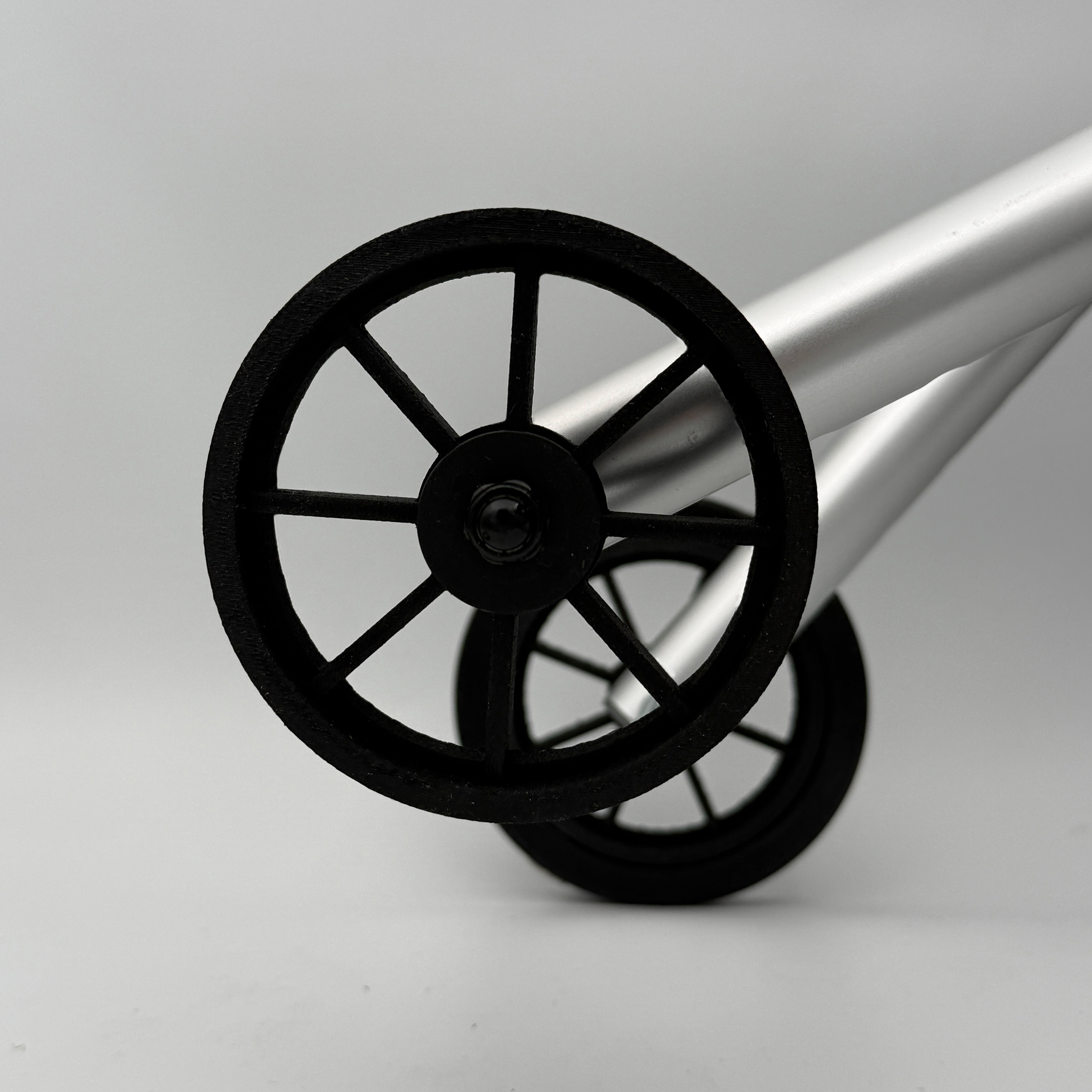
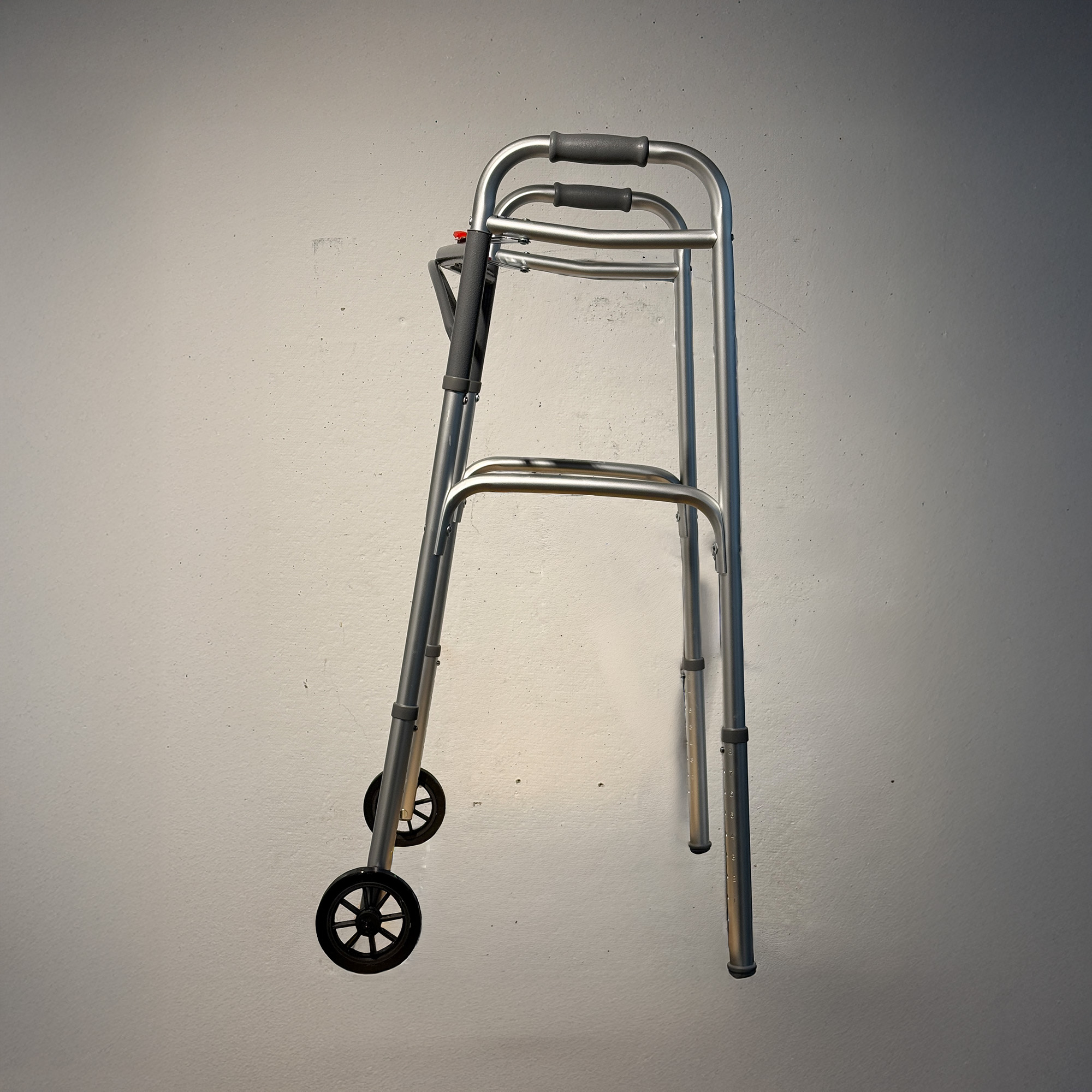
Inspired by the Sea urchin’s ball-and-socket joint, I redesigned a standard 5-inch walker wheel using elastic sphere modules to create alternating soft and rigid zones. Through iterative CAD modeling and additive manufacturing in TPU and PAHT-CF, I refined the structure for improved strength and demonstrated enhanced performance at low indoor thresholds.
Tools
3D Printing
Prototyping
Biomimicry
Rhino
Materials
MDF Wood
PHAT-CF(PA12+Carbon Fiber)
TPU
Rethinking the Wheel-Ground Interface
Mobility begins at the wheel — the primary interface between the human body and the ground.
Most walker wheels rely on rigid, solid tires, offering limited shock absorption over small indoor thresholds and uneven surfaces. This project explores how biological joint systems manage flexibility and stiffness simultaneously and translates those principles into an adaptive wheel architecture.
Inspiration
Sea Urchin
Ball and Socket
Mechanics
Sea urchin spines are attached to the shell through a ball-and-socket joint that allows multi-directional movement. Under compression, collagenous ligaments rapidly stiffen, transforming a flexible joint into a rigid support structure. This reversible shift between flexibility and structural locking became the foundation of the wheel system.
Mechanical Translation
Biological Principle
to
Mechanical Strategy
- Flexible Joint -> Elastic Sphere Articulation
- Load-induced stiffening -> Deeper Socket Engagement
- Structural Locking -> Alternating soft and rigid zones

The result is a wheel cross-section that adapts dynamically to terrain.
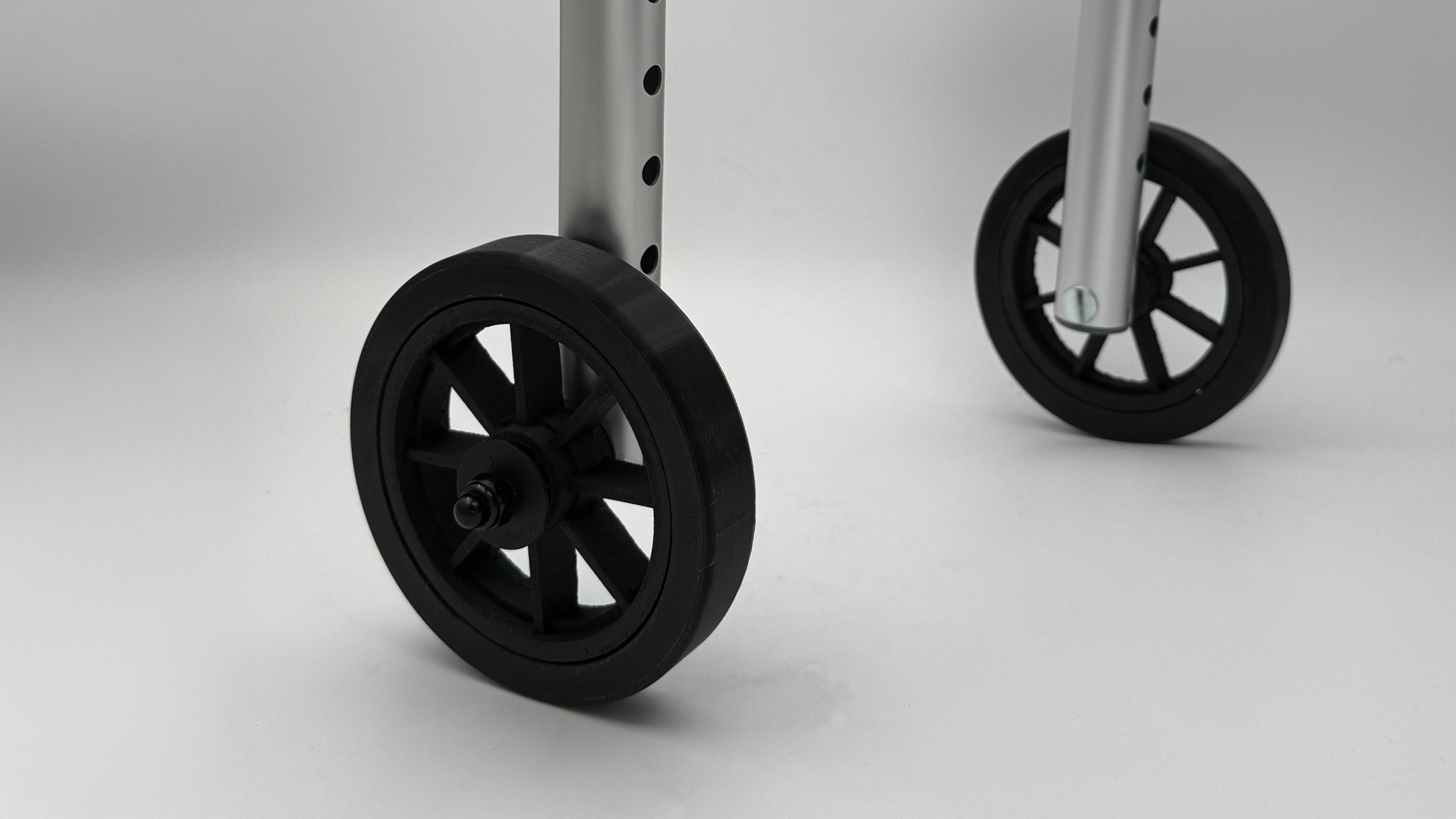
System Architecture
Alternating Soft & Rigid Zones
- Central rigid hub for structural integrity
- Elastic sphere modules along the rim
- Controlled compression channels
- Reinforced spoke geometry
Iteration & Prototyping
Prototype#2
ASA + TPU
The housing and internal chamber system were designed and assembled to support controlled airflow, layered biomaterial sheets, and separated heating and condensation zones.
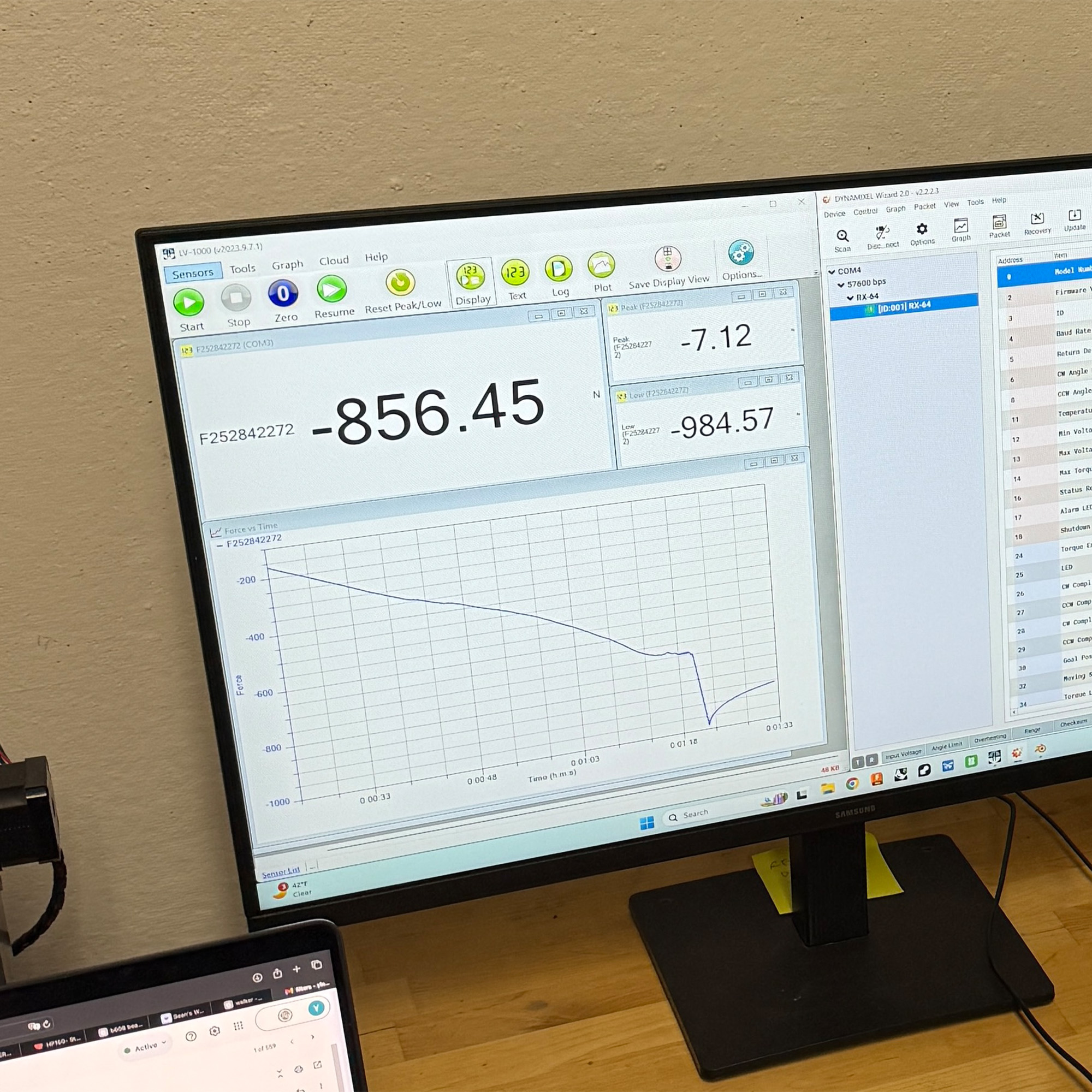
Compression Testing
Mechanical compression testing evaluated deformation behavior under load.

The adaptive wheel demonstrated:
- Controlled localized compression
- Reduced abrupt impact compared to a solid tire

Testing validated that the sphere modules engage progressively under load and recover shape after release.
Final Prototype
System Behavior
Flat Surface
- Sphere modules move freely within cavities.
Impact / Threshold
- Spheres are pushed deeper into the socket, increasing contact stiffness.
Recovery
- Elastic modules regain flexibility, preparing for the next movement cycle.

This cyclical transformation mirrors the biological locking mechanism observed in sea urchins.
???
??????????????????????
PHAT-CF
TPU
Images
Speaker Shot
Rectangular wooden speaker box with two black speaker drivers on the front and two metal knobs with a toggle switch on the side.
Light softly diffuses from the back, while sound projects forward with clarity—two directions working in harmony within a single form.